
Rapelay
by DrDetroit👁 61
The most infamous adult game ever made, the panic it caused, and why nobody at the time bothered to tell the story straight.
Note
This isn't a normal review, and there's no Gooning section. RapeLay has been banned, pulled or effectively outlawed in a long list of countries, and it hasn't been sold anywhere, Japan included, since 2009. One of the characters it puts through its scenarios is a child. There's no defending that, and I'm not going to try.
But it's part of the history of this genre, and a big part of the history of Illusion, the studio behind Koikatsu and VR Kanojo. And almost everything written about it at the time was faux-outraged scald copy from people who'd clearly never been near it. So this is the fair version: what it was, what happened, and what it changed.
The Setup
RapeLay was made by Illusion and released in Japan on 21 April 2006, for Windows. The premise is about as subtle as the title: a man is caught groping a girl on a train, gets reported, and decides to take revenge on her, her sister and her mother. That's as much plot as I'm going to give it, and frankly, it's about as much plot as it had.
It was a Japan-only release. Illusion never sold it outside Japan, never translated it, and never supported it anywhere else. And for nearly three years, that's exactly where it stayed.
What Actually Happened
In early 2009, copies started turning up on Amazon, listed by third-party sellers rather than by Illusion. That's when the West noticed it. Three years after release.
What followed was a textbook moral panic. Equality Now launched a campaign urging people to write to Illusion and to the Japanese Prime Minister at the time, Taro Aso, arguing that the game breached Japan's obligations under the UN's convention on discrimination against women. Amazon pulled the listings. In the UK, Keith Vaz MP held it up as an example of why games needed tighter regulation and vowed to raise it in Parliament. Australian campaigners pushed for, and got, a ban there too.
Illusion's position was simple, and, as far as it went, true: the game was legal in Japan, and they'd never sold it abroad. But the pressure didn't let up. Illusion stripped references to the game off its website and stopped distributing it, citing concern about the damage to the wider industry.
Then, in May 2009, the Ethics Organization of Computer Software, Japan's self-regulatory body for adult PC games, restricted the sale and production of games like it. RapeLay became impossible to buy, even in Japan. Japan's ruling party set up its own team to look at tightening the rules around the same time.
Since then it's been banned or effectively banned in a long list of countries, including the UK, the US, Canada, Australia, Germany, Ireland, France, Brazil and Argentina. In Argentina, it's reportedly the only video game ever banned outright.
What the Coverage Got Wrong
Read the headlines from 2009 and you'd think a brand-new "rape simulator" had just been launched on the Western market by a cynical Japanese studio. None of that was true.
It wasn't new; it was three years old. It wasn't being sold in the West, at least not by Illusion; it was being flogged by third-party sellers on Amazon. And most of the people writing about it had clearly never played it, or even seen it running. They'd read someone else's outraged write-up and rewritten it with more adjectives. Half the "facts" in circulation came from one article copying another.
That matters, because it set the tone for how this genre has been covered ever since: not by people who've played the games, but by people who've heard about them.
What the Coverage Got Right
To be fair to the scalds, and I don't say that often, they weren't wrong about everything. A game that lets you do what RapeLay lets you do to a child isn't edgy, it isn't "dark fiction", and it isn't a free-speech hill I'm going to die on. That part of the outrage was earned.
Where I part company with them is everything else. The panic wasn't really about one character. It was about the idea that adults playing non-con fiction was itself the problem, and that's a much bigger claim. If you read my No Mercy review, you'll know where I stand on that.
So there's a split here: the legitimate concerns of the scalds, and my desire to allow free speech and expression. If this game didn't have a child in it, I'd very much be on the other side of the aisle entirely. You can have an issue with a game about these topics, but tell me this: is a simulator of this sort worse than a simulator for murder? Because if we're going down that line of thought, that's basically every FPS and every copy of GTA ever released. Now, obviously, I don't buy the idea that GTA or FPS games are that at all. BUT, you can't have one argument without its reflection.
The Fallout
RapeLay changed Illusion, and it changed the Japanese adult games industry.
Illusion went quiet in the West for years after 2009, and Japanese eroge developers more broadly got a lot more careful about who could buy their games, with "not for sale outside Japan" warnings and region locks becoming the norm. The industry's own ethics body tightened up its rules. The days of Japanese adult studios cheerfully ignoring what the rest of the world thought were over.
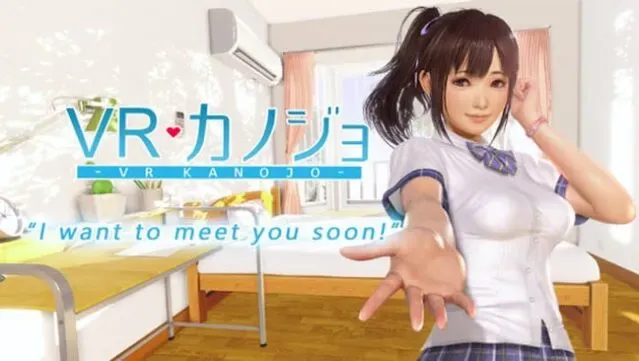
And then, slowly, Illusion came back. A decade later, VR Kanojo and Koikatsu Party were on Steam with English support, sold to the same Western audience Illusion had backed away from in 2009. The studio eventually wound down in 2023, and its staff scattered into new outfits, one of which went on to remake VR Kanojo.
So the most infamous thing Illusion ever made ended up being a footnote in a much bigger story. It's just a footnote that everyone remembers.
And I would note, this didn't entirely stop Illusion making some... questionable game choices.
The Verdict
RapeLay deserves its place in the history books, but not for the reasons the 2009 headlines gave. It wasn't a uniquely evil product unleashed on an unsuspecting West. It was a nasty, three-year-old Japanese game that crossed a line, got noticed by accident, and got covered by people who couldn't be bothered to check their facts.
The child content was indefensible, and it's the reason this one stays in the bin. Everything else about it, the non-con premise, the subject matter, the fact that it existed at all, is the sort of thing adults should be free to make and play, and that argument deserved a better hearing than it got.
As I say above, without the child content, I would be defending this game's right to exist, not chastising it. But that's not the situation we're in.
TL;DR
An indefensible game with an indefensible character in it, buried under a decade of lazy, copy-paste outrage. It changed Illusion and the Japanese adult games industry for good. Banned, unavailable, and staying that way.